


How Waste Wood Becomes Rich Organic Matter and Builds Healthy, Fertile Soil
Every year, thousands of tons of old logs, tree trunks, branches, and decayed wood are removed from farms and sold as firewood. Softwood species are especially sold because they are easy to cut and burn. In many places, one ton of firewood is sold for around ₹4,000. Some farmers even burn wood waste in the field to clear space quickly. At first glance, this may seem like a practical decision. However, from the perspective of soil science, it is a significant loss of valuable organic matter that nature has created over many years.
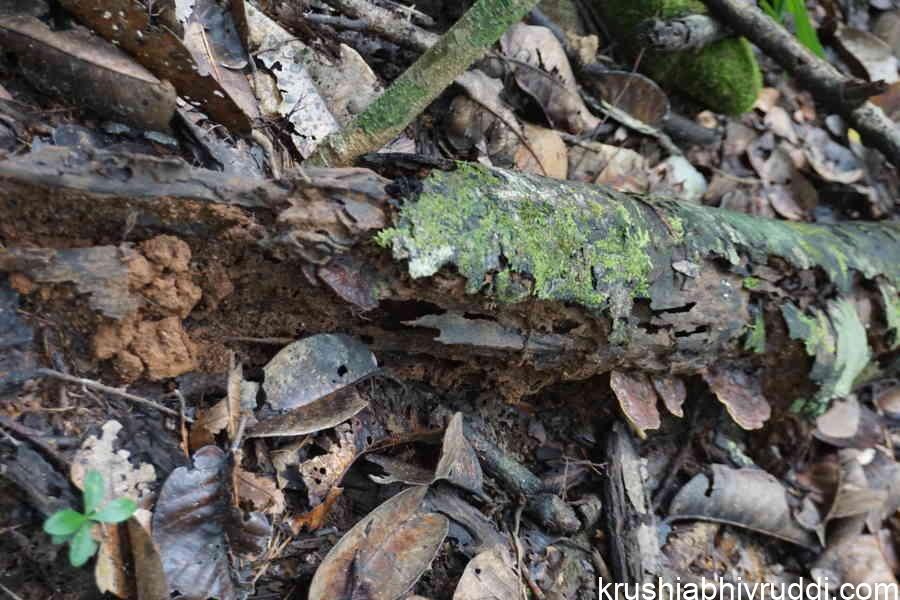
A decaying log lying on the forest floor is not waste. It is a living biological factory. If left to decompose naturally, its value to the soil can become far greater than the money earned by selling or burning it.
What Is Present in Wood?
Wood is mainly made up of three natural compounds:
- Cellulose (40–50%) – the primary structural material of plant cells.
- Hemicellulose (20–30%) – a carbohydrate that decomposes more quickly than cellulose.
- Lignin (20–30%) – a complex substance that gives wood its hardness and takes much longer to decompose.
Besides these, wood contains small amounts of minerals such as calcium, potassium, magnesium, phosphorus, sulfur, iron, manganese, zinc, copper, and boron. Although these nutrients are present in smaller quantities than in leaves, they are slowly released into the soil over time as decomposition progresses.
Which Trees Are Suitable?
Almost every tree can contribute organic matter after decomposition. However, softwood species generally break down faster than dense hardwoods. Soft woods commonly used in farms include Silver Oak, Erythrina (Indian Coral Tree), Subabul (Leucaena), Gliricidia, Sesbania, and other fast-growing shade trees. Small branches, twigs, bark, sawdust, wood chips, and fallen trunks are all useful.
Hardwoods such as teak and rosewood also decompose, but because of their dense structure and higher lignin content, they require much more time.
Microbes – The Invisible Workers:
Once wood comes into contact with moisture and soil, millions of microorganisms begin their work. Different groups of fungi, bacteria, and actinomycetes colonize the wood surface.
Fungi are the primary decomposers of wood. They produce special enzymes that break down cellulose and lignin—materials that most other organisms cannot digest. As fungi soften the wood, bacteria continue breaking it into simpler compounds. Earthworms, termites, beetles, and other soil organisms further fragment the material, making it easier for microbes to complete the process.
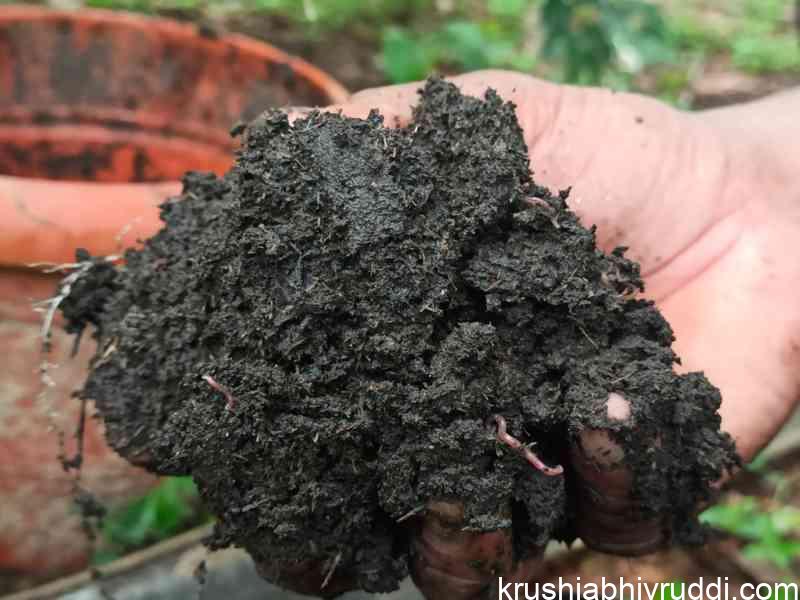
This biological activity continues for several years until the wood is converted into dark, stable organic matter.
How Decayed Wood Creates Humus:
One of the greatest gifts of decomposed wood is humus.
Humus is the dark, stable organic material formed after plant residues have completely decomposed. It is the foundation of fertile soil. Unlike fresh organic matter, humus remains in the soil for many years and continuously improves its quality.
Humus performs several vital functions:
- Improves soil structure.
- Increases water-holding capacity.
- Reduces soil compaction.
- Enhances soil aeration.
- Stores nutrients and releases them slowly.
- Supports beneficial microorganisms.
- Reduces nutrient losses through leaching.
Even though wood initially has a high carbon content and decomposes slowly, it ultimately becomes one of the most stable sources of long-lasting soil organic matter.
How Wood Helps Build Fertile Soil:
Healthy soil is not created overnight. It forms through the slow weathering of rocks mixed with decomposed organic materials over hundreds or even thousands of years.
When wood decomposes, microbes convert it into organic carbon. This organic matter combines with mineral particles such as sand, silt, and clay to form stable soil aggregates. These aggregates create pore spaces that allow air, water, and roots to move freely.
The improved soil also provides an ideal habitat for earthworms and beneficial microbes, creating a continuous cycle of nutrient recycling and biological activity. This is one of the reasons forest soils remain fertile even without chemical fertilizers.
A Better Option for Farmers:
Instead of selling every fallen log or burning wood waste, farmers can use it wisely.
Large logs can be placed along field borders or between tree rows to decompose naturally. Small branches can be chipped and used as mulch. Sawdust and wood chips can be composted with cattle manure, green leaves, or nitrogen-rich materials to speed decomposition and produce excellent compost.
Although decomposition may take two to five years depending on the wood species, moisture, and climate, the long-term benefits far exceed the short-term income from firewood sales.
Conclusion
A decayed log is not dead—it is quietly creating tomorrow’s fertile soil. Selling it for a few thousand rupees or burning it for temporary convenience destroys a valuable natural resource. Farmers who recycle wood waste back into their fields are investing in healthier soil, stronger microbial life, better water retention, and sustainable crop production.
Nature never considers decayed wood as waste. It transforms it into humus—the black gold that feeds the soil, nourishes crops, and secures the future of agriculture.


