


Soil Healthy is the foundation of successful agriculture. While farmers often focus on fertilizers and crop protection, one of the most important factors influencing productivity is frequently overlooked—organic matter. Today, many farmers apply very little organic matter to their fields, believing that organic manure alone is enough. However, organic matter and organic manure are not the same, and understanding this difference is essential for maintaining soil fertility and ensuring sustainable crop production.
Organic Matter and Organic Manure Are Not the Same:
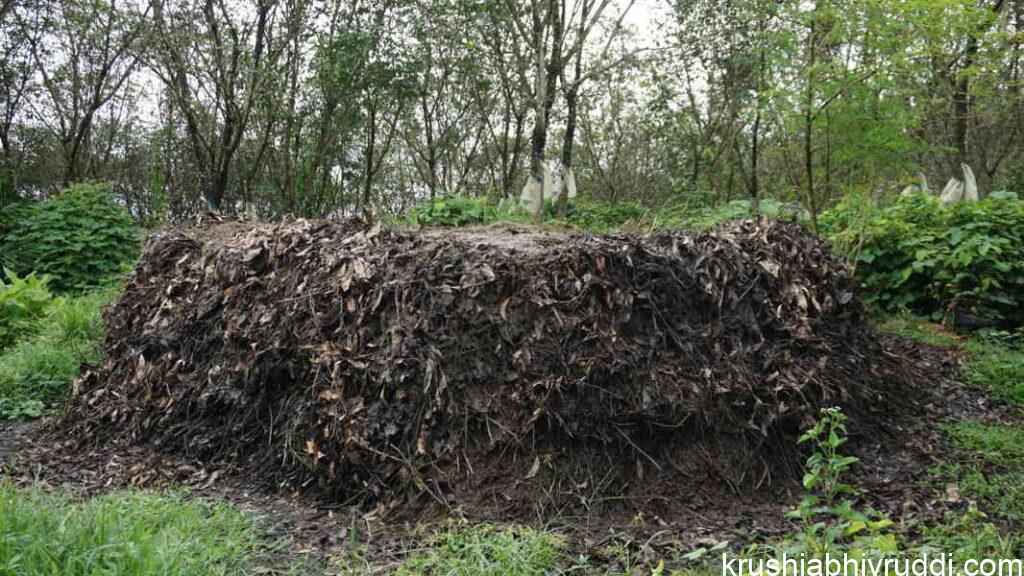
Organic matter refers to all decomposed or partially decomposed plant and animal residues present in the soil. It includes farmyard manure (FYM), leaf manure, green leaves, crop residues, leaf litter, compost, and other bulky organic materials that enrich the soil. Organic manure, on the other hand, is mainly used as a source of nutrients such as nitrogen, phosphorus, and potassium to replace or supplement chemical fertilizers. While organic manure contributes some organic matter, its primary purpose is nutrient supply, whereas bulk organic matter plays a much greater role in improving soil health.
Replenishing Organic Matter for Long-Term Soil Fertility:
Every year, crops remove a significant amount of nutrients from the soil. Along with harvesting, valuable organic carbon is also lost, reducing the soil’s natural fertility. If these losses are not replenished, the soil gradually becomes weak, compact, and less productive. Simply applying chemical fertilizers or even small quantities of organic manure cannot fully restore the soil’s physical and biological properties. The lost organic matter must be replenished regularly to maintain long-term productivity.
Improving Soil Structure and Root Development:
One of the greatest benefits of organic matter is its ability to improve soil structure. It binds soil particles into stable aggregates, making the soil loose, porous, and easy for roots to penetrate. Improved soil structure enhances aeration and allows rainwater to infiltrate easily instead of running off the surface. As a result, roots grow deeper and healthier, enabling crops to absorb nutrients and moisture more efficiently. This is real soil health.
Better Water Retention and Drainage:
Organic matter also acts like a natural sponge by increasing the soil’s water-holding capacity. During dry periods, soils rich in organic matter retain moisture for a longer time, reducing water stress on crops. At the same time, excess rainwater drains more effectively, preventing waterlogging and root damage. This balance is especially important under changing climatic conditions, where irregular rainfall has become common.
Organic Matter Supports Living Soil:
Another vital contribution of organic matter is its support for beneficial soil microorganisms. Billions of bacteria, fungi, earthworms, and other beneficial organisms depend on organic matter as their food source. These organisms break down plant residues, release nutrients in plant-available forms, suppress harmful pathogens, and improve overall soil biological activity. A biologically active soil is often referred to as a “living soil,” and it is this living system that supports healthy crop growth.
Enhancing Nutrient Availability and Fertilizer Efficiency:
Organic matter also improves nutrient availability. It increases the soil’s capacity to hold and slowly release essential nutrients, reducing nutrient losses through leaching. This means fertilizers applied to the field are utilized more efficiently by crops, resulting in better nutrient uptake and improved yields. Farmers may even reduce fertilizer wastage when soils contain adequate organic matter.
Practical Ways to Build Soil Organic Matter:
Unfortunately, many farming systems today remove crop residues from the field, burn fallen leaves, or neglect the application of farmyard manure and other bulky organic materials. These practices accelerate the decline of soil organic matter. To reverse this trend, farmers should regularly incorporate farmyard manure, compost, green leaf manure, crop residues, leaf litter, and other locally available organic materials into the soil. Even moderate annual applications can gradually rebuild soil organic carbon and improve soil quality over time.
Healthy Soil: An Investment for the Future:
It is important to remember that soil health cannot be purchased in a single season. It is built through continuous care and the regular addition of organic matter. Fertilizers provide nutrients for crops, but organic matter builds the soil that produces those crops year after year. A healthy soil with sufficient organic matter supports stronger root systems, better microbial activity, improved water retention, efficient nutrient uptake, and greater resilience against drought and heavy rainfall.
In modern agriculture, increasing crop yields should never come at the cost of declining soil health. Investing in organic matter is an investment in the future of farming. Farmers who maintain healthy soils not only achieve higher and more stable yields but also reduce production costs and improve the sustainability of their farms.
Remember: Fertilizers feed the crop, but organic matter feeds the soil. And when the soil is healthy, it rewards the farmer with productive fields, resilient crops, and profitable agriculture for generations to come.

