


For generations, our forefathers followed a simple but powerful method of developing and preserving plant diversity—seed propagation. When they found an exceptionally good mango, jackfruit, coconut or another useful crop in a village or forest, they often collected its seeds and planted them on their farms. They did not always know the scientific principles behind this process, but their observations and experience contributed to the enormous diversity of plants we see today.
In those days, commercial plant nurseries were very limited. Even where nurseries existed, many plants were raised from seeds. Over time, however, grafting and other vegetative propagation techniques became increasingly popular, particularly in commercial horticulture.
Today, farmers are often told that grafted plants are better than seedlings. For commercial cultivation, this is largely true. A grafted plant can reproduce the desirable characteristics of a selected mother plant more reliably. Farmers can therefore expect greater uniformity in fruit quality, plant growth, maturity and production.
But there is another side to this story that deserves attention.
Grafting Gives Uniformity—Seeds Give Diversity:
A grafted plant is essentially a genetic copy of the selected plant, apart from the contribution of the rootstock. This uniformity is extremely valuable when establishing a commercial orchard.
But if we continuously depend only on vegetative propagation, we may gradually reduce the genetic diversity available in our cultivated plants.
Seed propagation is different.
When a plant reproduces through seeds, the offspring receives genetic material through sexual reproduction. In cross-pollinated crops, pollen from another plant can contribute to the next generation. As a result, seedlings may show differences in fruit colour, size, taste, aroma, maturity period, plant architecture, disease tolerance and other characteristics.
Not every seedling will be better than its parent. Many may be inferior. But occasionally, nature produces something exceptional.
That exceptional plant can become the beginning of a new variety.
Nature Is Also a Breeder:
Many of the varieties and plant forms that farmers value today did not suddenly appear from a laboratory. Plant diversity has been shaped over generations through natural variation, selection, mutation, recombination and cross-pollination, followed by careful selection by farmers and breeders.
Our ancestors were, in a sense, practising selection without using modern scientific terminology.
Suppose a farmer plants 100 mango seeds. The resulting trees may not all produce exactly the same type of fruit. One may produce a fruit with exceptional sweetness, another with a distinctive aroma, another with attractive colour, and another with better adaptation to local conditions.
If that outstanding tree is identified and preserved, it can become valuable genetic material for future propagation and breeding.
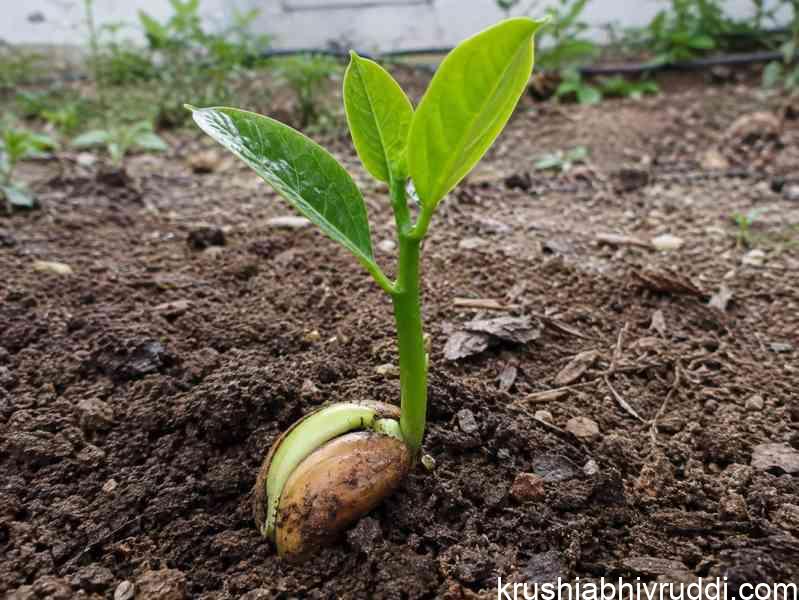
This is why seed propagation should not be considered merely an old-fashioned method.
Commercial Farming and Conservation Have Different Objectives:
The important point is that grafting and seed propagation should not be treated as competing technologies.
They have different purposes.
For a farmer establishing a commercial mango orchard, for example, a grafted plant of a proven variety may be the appropriate choice because uniformity and predictable performance are important.
But if the objective is conservation of genetic diversity, development of new varieties, planting trees in a community area or creating a future genetic resource, seedlings can have an important role.
Seed-grown plants may also be particularly valuable in forest-development and biodiversity-oriented programmes where the objective is not simply to produce identical trees but to maintain a broader genetic base.
We Should Preserve the “Unknown” Plants Too:
There is another important lesson here.
When farmers find an unusual fruit tree in their fields or villages, they should not immediately dismiss it simply because it does not belong to a well-known commercial variety.
A tree producing an unusual mango, jackfruit or other fruit could contain valuable genetic characteristics.
Farmers can document such trees by recording:
- Fruit colour, size and shape
- Taste and aroma
- Harvesting season
- Yield
- Disease and pest tolerance
- Response to local climate
- Growth characteristics
- Seed characteristics
Seeds from promising trees can be preserved, while the mother plant can also be maintained through grafting. In this way, both diversity and desirable characteristics can be conserved.
A New Variety Can Begin in an Ordinary Farm:
Modern India also has a legal framework for protecting plant varieties and recognising farmers’ contributions. Under the Protection of Plant Varieties and Farmers’ Rights (PPV&FR) Act, 2001, there are provisions for registration of new, extant and farmers’ varieties. The PPV&FR Authority also maintains a specific system for registration of farmers’ varieties.
Therefore, the idea of preserving an unusual plant found on a farmer’s land is not merely sentimental. If a genuinely distinct and eligible variety is identified and properly documented, there are institutional mechanisms through which plant varieties can be registered and recognised. It is more accurate to speak of plant-variety registration and protection, rather than simply calling it a patent.
Let Us Not Lose What Nature Has Given Us:
Modern horticulture has given farmers enormous advantages. Grafting, improved varieties and scientific nurseries have made commercial fruit production more efficient and predictable. We should certainly use these technologies.
But uniformity should not come at the cost of diversity.
Our farms should not become places where only a few commercially popular clones survive. Alongside commercial orchards, there should also be space for seed-grown plants, local varieties, traditional trees and promising natural seedlings.
Perhaps the next exceptional mango, jackfruit or another fruit variety is already growing somewhere in an ordinary farmer’s field.
Our forefathers gave nature the opportunity to create diversity.
Now it is our responsibility to preserve that opportunity for the future.
Seed propagation may be less predictable—but sometimes, that unpredictability is exactly where tomorrow’s new variety begins.


