


For thousands of years, forests and agriculture existed side by side. Farmers cultivated their lands, and wild animals found enough food inside forests. Crop damage occurred occasionally, but it was not the widespread problem that many farmers face today.
Today, however, monkeys, peacocks, wild pigs, porcupines, deer, elephants, and several other wild animals regularly enter agricultural fields and destroy crops. A farmer spends months preparing the land, purchasing seeds, applying fertilizers, irrigating, and protecting the crop from pests and diseases. Yet, within a few minutes, wild animals can destroy an entire season’s hard work.
Most discussions focus only on controlling wild animals. But very few people ask a simple question:
Why are these animals leaving the forests and entering our farms?
The answer lies deep inside our forests.
The Forests Are Losing Their Natural Food Sources;
Wild animals do not deliberately choose to damage farmers’ crops. Like humans, they search for food wherever it is available.
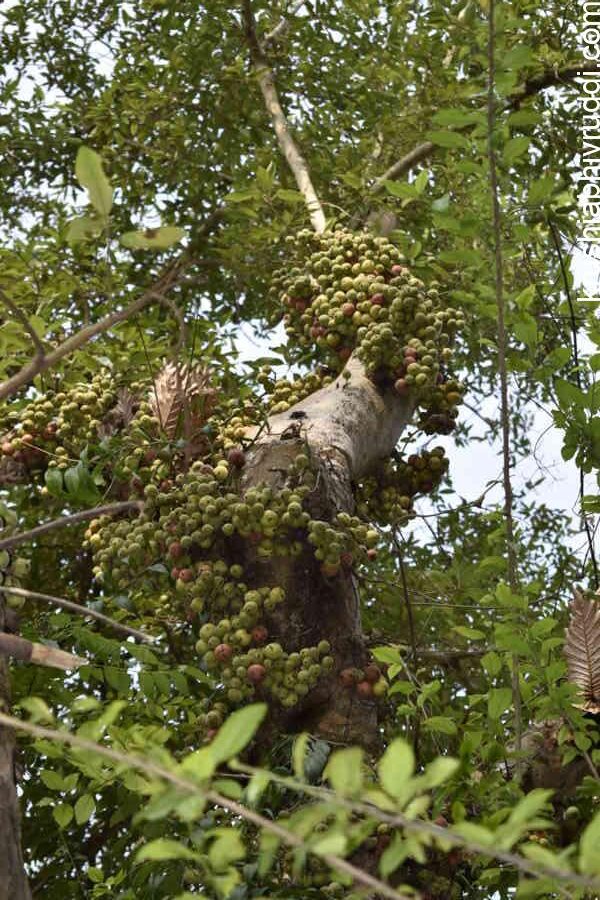
In earlier decades, forests contained abundant fruit-bearing trees and plants that provided food throughout the year. Trees such as Cluster Fig, Banyan, Peepal, Mango, Jungle Jack, Jackfruit, Spondias (hog plum), wild berries, and many other native species supplied fruits, leaves, flowers, and seeds for birds, monkeys, squirrels, wild pigs, and numerous other animals.
Today, many of these food-producing trees have declined in several forest areas. As a result, animals are forced to travel longer distances in search of food.
When they reach cultivated fields, they find nutritious crops that are easier to access than searching through the forest.
Animals Always Choose Easily Available Food:
Every living creature tries to conserve energy.
A monkey naturally prefers food that is easy to obtain. If ripe cocoa pods are hanging on a short cocoa tree, why would it climb a tall coconut tree? If papaya, banana, maize, or vegetables are easily available on farms, they become attractive food sources.
This is not because animals have become “bad.” They are simply following their natural instinct to obtain food with the least effort.
Are We Rejuvenating Forests Scientifically?
Large-scale plantation programmes are conducted every year. But an important question deserves attention.
Are we planting enough fruit-bearing native trees that actually feed wildlife?
If forest restoration focuses mainly on timber species or a limited number of trees, wildlife may continue to face food shortages.
A healthy forest should provide food throughout the year. That requires a rich diversity of native fruit-bearing trees and shrubs that support monkeys, birds, squirrels, bats, insects, and many other animals.
Forest restoration should therefore include species that produce fruits, flowers, seeds, and leaves across different seasons.
A Simple Idea Can Make a Difference:
Nature itself teaches us how forests regenerate.
Animals and birds spread seeds naturally. Human society can also participate in this process responsibly.
During the fruiting season, seeds of locally native fruit trees such as mango, jackfruit, cluster fig, peepal, banyan, and other suitable indigenous species can be collected and dispersed in appropriate degraded forest areas wherever permitted and under scientific guidance. Over time, many of these seeds may germinate naturally and help restore future food sources for wildlife.
Community participation in restoring native food trees can become an important contribution towards reducing future conflicts between wildlife and farmers.
The Problem Cannot Be Solved by Farmers Alone:
Farmers already bear enormous losses due to crop damage. They spend additional money on fencing, lights, alarms, and guarding their fields throughout the night.
If the root cause remains unchanged, farmers will continue spending more every year while wildlife continues searching for food.
The solution therefore cannot depend only on crop protection.
Forest departments, scientists, environmental organisations, educational institutions, local communities, and citizens must work together to restore forests that can naturally sustain wildlife.
A Social Responsibility:
Many people believe that solving this problem is entirely the responsibility of the Forest Department.
That thinking needs to change.
Forests belong to all of us because they protect our climate, water resources, biodiversity, and food security. Every citizen can contribute by supporting native tree planting, protecting existing fruit-bearing trees, discouraging unnecessary destruction of natural habitats, and participating in community conservation programmes.
Protecting forests is not only about saving wildlife—it is also about protecting agriculture.
Trees That Can Help Feed Wildlife and Reduce Crop Damage:
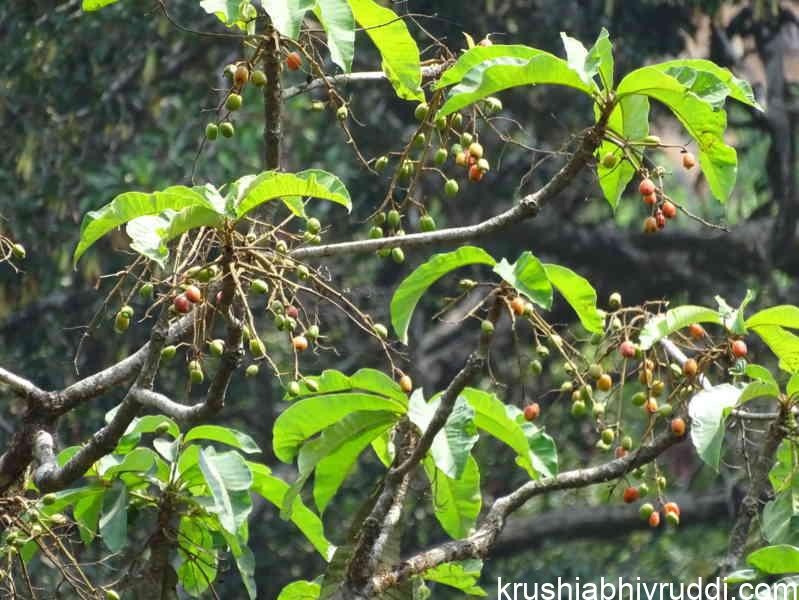
If forests are to support healthy wildlife populations, they must provide food throughout the year. Therefore, forest restoration programmes should include more native fruit-bearing trees that naturally serve as food for wild animals and birds.
Some important species include:
| Tree | Animals that feed on it |
| Cluster Fig (Ficus racemosa) | Monkeys, birds, bats, squirrels, wild pigs |
| Banyan (Ficus benghalensis) | Birds, monkeys, bats |
| Peepal (Ficus religiosa) | Birds, monkeys, squirrels |
| Jackfruit | Monkeys, wild pigs, squirrels |
| Wild Jack | Monkeys, birds |
| Mango | Monkeys, birds, bats, wild pigs |
| Jamun | Birds, bats, monkeys |
| Indian Gooseberry (Amla) | Birds, monkeys |
| Hog Plum (Spondias mombin / Spondias pinnata) | Monkeys, birds, wild pigs |
| Papaya | Monkeys, birds |
| Passion Fruit | Birds and monkeys |
| Mulberry | Birds, monkeys |
| Indian Blackberry and other native berries | Birds and small mammals |
The Ficus species (Cluster Fig, Banyan, and Peepal) are especially valuable because they produce fruits at different times of the year and support hundreds of species of birds, mammals, insects, and pollinators. Ecologists often regard them as keystone species because they provide food when many other trees are not fruiting.
A Message to Society:
Instead of throwing mango seeds, jackfruit seeds, jamun seeds, or amla seeds into garbage, we can collect them during the fruit season and, where appropriate and permitted, disperse them in suitable degraded forest areas or community reforestation programmes. Even if only a small percentage germinates, they can become food trees for future generations of wildlife.
A single fruit seed can become a tree. A single tree can feed hundreds of animals over its lifetime.
Conclusion
Crop damage by wild animals is only the visible symptom. The deeper problem is the gradual decline of natural food availability in many forest ecosystems.
Unless we restore forests with diverse native food-producing trees, conflicts between wildlife and farmers are likely to increase in the coming decades.
Instead of fighting only the animals, we must also restore the forests that once fed them.
A healthy forest feeds wildlife. Well-fed wildlife is less likely to depend on farmers’ fields. Protecting forests and restoring their natural food resources is therefore not only an environmental responsibility—it is an investment in the future of Indian agriculture and the nation’s food security.


