


“We can pump borewell water in minutes, but nature may take years to put it back.”
Today, in many parts of India, the ultimate source of water for agriculture and even household needs has become the borewell.Open wells, which were once common in villages and farms, are slowly disappearing. In many places, they cannot provide enough water throughout the year. As a result, farmers increasingly depend on deep borewells.
For many farmers, a borewell looks almost like a gold mine beneath the land. Once the borewell is successful, water can be pumped whenever it is needed—day or night, summer or winter. This has made it possible to cultivate even lands where farming was previously difficult, including slops and hilly areas.
Groundwater has indeed become extremely important for Indian agriculture. The Central Ground Water Board says groundwater accounts for a major share of irrigation, and dependence on it has increased significantly over the years. But there is one question we must ask:Where is all this water coming from?
A Wrong Belief About Groundwater:
Many of us have a common belief about borewell water. When we find a good water source under our land, we may think:
“There is a huge amount of water source in my land. It is my water, because it is inside my boundary. I have the right to use as much as I want.”
Because of this thinking, when a farmer gets a successful borewell, the next thought is often to increase the cultivated area, plant more crops and use more water.But this way of thinking is not correct.
Groundwater is not a private underground lake belonging to one farmer.It is part of a natural water system that can extend far beyond our farm boundaries. Water moves through soil, soft rocks, rock cracks and underground split formations. What we pump from one place can affect the water available in surrounding areas.
So, we should remember:“The land may belong to us, but the water beneath it is part of nature.”Groundwater is a natural resource shared by the whole community and, ultimately, by the whole Earth. Therefore, finding water in a borewell does not mean that we have unlimited freedom to use it.
A successful borewell should make us responsible, not careless. “How much water can I get?” to “How much water can I safely use?”
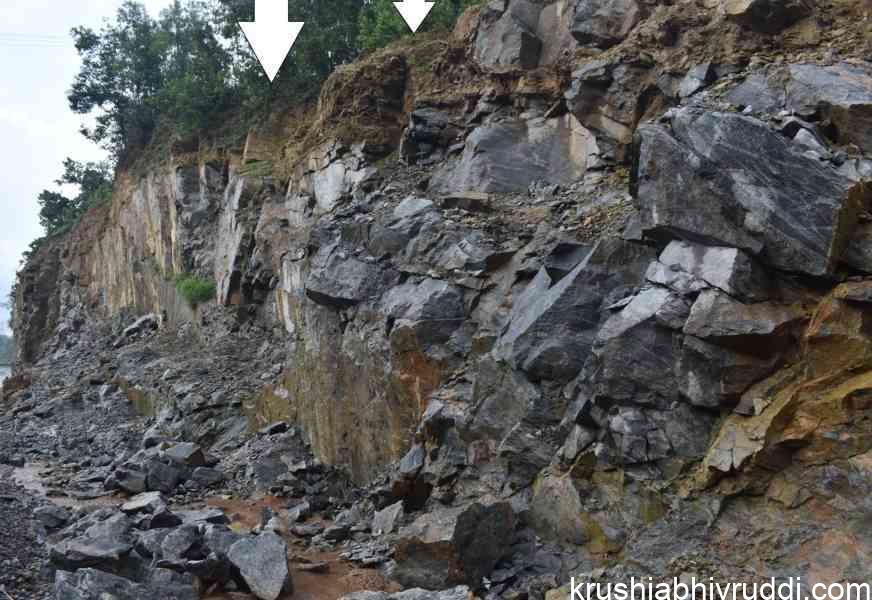
Groundwater is not an unlimited source:
A borewell may give water continuously for many years. This can make us believe that the water is permanent.But it is not.
Groundwater is a replenishable resource, but replenishment takes place at different rates depending on rainfall, soil, rocks, land conditions and other factors.
If we take out more water than nature puts back, the underground storage starts reducing.The water level goes deeper.Then the existing borewell may produce less water.Sometimes it may completely fail.That is why a borewell should not be treated as an unlimited source.
“A borewell gives us water, but it does not manufacture water.”
What happens when we pump too much?
Imagine a large underground vessel.It contains water, and several natural pathways may bring water into it and allow water to move through it.If we continuously take out more water than comes in, the storage level will gradually fall.
The same basic principle applies to groundwater.
When groundwater extraction becomes greater than annual recharge, the area can become stressed or even over-exploited. The Central Ground Water Board classifies groundwater assessment areas according to the relationship between extraction and available annual resources.
India’s groundwater assessments already identify many areas as semi-critical, critical and over-exploited. In the 2025 national assessment, 730 assessment units were categorized as over-exploited.
So this is not just a future problem.
It is already happening in many parts of the country.
Does deeper water mean better water?
When the water table goes down, the water available to a borewell can come from different depths and different rock formations. “Different rocks contain different minerals. When groundwater moves through these rocks, it can take some of these minerals with it. Because of this, groundwater quality can be different in different places.”
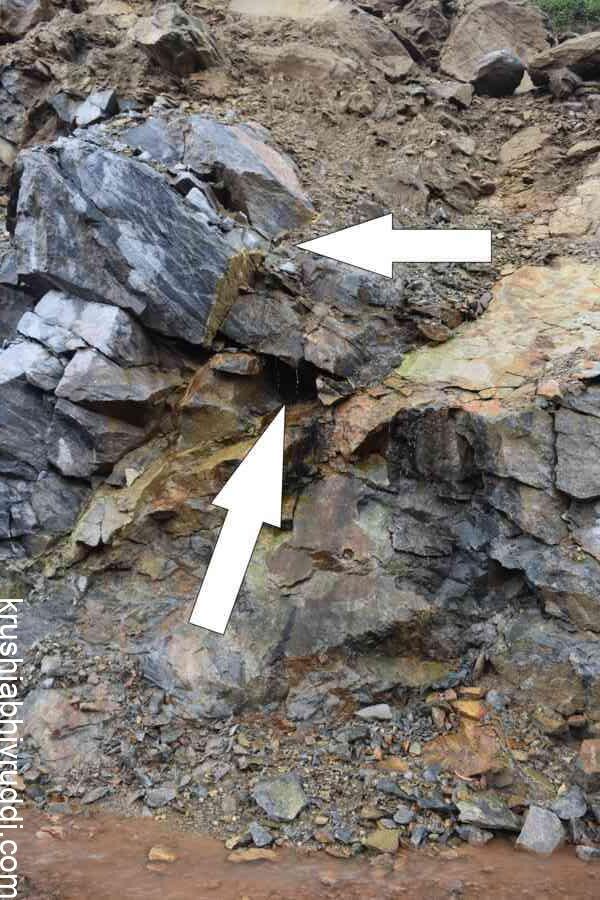
The quality of groundwater depends on the geology and the substances through which the water has moved and remained underground.
Therefore, we should not assume: “The deeper the borewell, the better the water.”
Groundwater quality also needs to be checked periodically, especially when the source is used for drinking or household purposes. CGWB continuously monitors groundwater levels and quality across the country.
Why are open wells important?
An open well is not just an old method of collecting water.
It can also act as a visible indicator of the local groundwater condition.
When the groundwater level is healthy, an open well may receive water naturally from the surrounding shallow aquifer.
Today, however, many farmers have moved from open wells to deep borewells because open wells often cannot meet modern agricultural demand.The problem is not the borewell itself.
The problem begins when we depend on borewells without understanding the underground water system.
Rainwater is the real source:
Ultimately, much of the groundwater recharge comes from rainfall and other surface-water sources. India’s groundwater assessments recognize rainfall as a major contributor to annual groundwater recharge. Therefore, every farm should ask:
How much rainwater is entering the ground? Are we allowing rainwater to run away?
Are farm ponds, trenches, contour bunds, check dams and other recharge measures being used where suitable?Are we keeping enough land open for water to enter the soil?
Groundwater management is not only about finding more water.
It is also about reducing unnecessary extraction and increasing recharge.
In fact, CGWB’s aquifer studies emphasize that demand-side management can have a strong effect on improving groundwater conditions, alongside recharge measures.
The future of our borewells depends on today’s decisions:
Today, we may have enough water.Tomorrow, the same borewell may give less.After some years, another borewell may have to be drilled deeper.Then another.This can become a cycle with no end.
We must remember:
“What we take from underground today is not necessarily replaced tomorrow.”Groundwater needs time to recharge.And fresh recharge does not always reach deep aquifers immediately.
So, before drilling another borewell, before increasing the pumping capacity, and before expanding irrigation, we should ask one simple question:
“How much water are we lifting , and how much water is nature putting back?”
That question is more important than simply asking:
“How deep can we drill?”
To Conclude:
Borewell water has given farmers tremendous opportunities.It has transformed dry land into productive farmland and helped provide water for agriculture and households. We should be grateful for this precious resource and use it wisely But a borewell should be treated as a bank account—not an endless water tank.If we continuously withdraw more than we deposit, one day the account will become empty.The same principle applies underground.
“Save the water below your feet today, so that your farm can have water tomorrow.”
Groundwater is hidden from our eyes.But hidden does not mean unlimited.
Before we pump more, let us understand what is beneath our feet.
That understanding is the first step towards protecting our farms, our drinking water and the future of agriculture.


