


Panniyur-9 Pepper Variety Shows Fantastic Performance in a Farmer’s Field at Ripponpete, Shivamogga
During a recent field visit to Ripponpete in Shivamogga taluk, Karnataka, I had an opportunity to visit the farm of Mr. Joseph Chacko, a progressive farmer who has developed an impressive black pepper cultivation system using Silver Oak trees as live support.
His farming journey is particularly interesting because it shows how a farmer can adapt to changing circumstances, learn from experience and gradually develop a better cultivation method.

From Rubber to Pepper:
Mr. Joseph Chacko originally came to Karnataka from Kerala with the intention of cultivating rubber and ginger. He established a rubber plantation, but later faced a major challenge when rubber prices declined.
Instead of giving up, he started thinking about how he could make better use of his land and existing trees. He eventually chose black pepper as an alternative crop.
The spacing between his rubber trees is approximately 15 × 12 feet. He planted Silver Oak trees between the rubber trees and used them as support for black pepper vines.
Over time, pepper became an important crop on his farm.
Learning Through Experience:
Initially, Mr. Chacko planted Panniyur-5. After cultivating it for four to five years, he noticed certain limitations, particularly variations in yield.
Based on his field experience, he gradually started introducing other varieties, especially Panniyur-9 and Panniyur-2. Although several pepper varieties are available, these varieties currently occupy a major portion of his plantation.
Today, he is particularly impressed with the performance of P-9.
Interestingly, this year the rainfall has been relatively low, yet Panniyur-9 has continued to perform well. According to his experience, its regular yield and spike characteristics make it an attractive variety for his conditions.
Why Panniyur-9 Has Impressed Him:
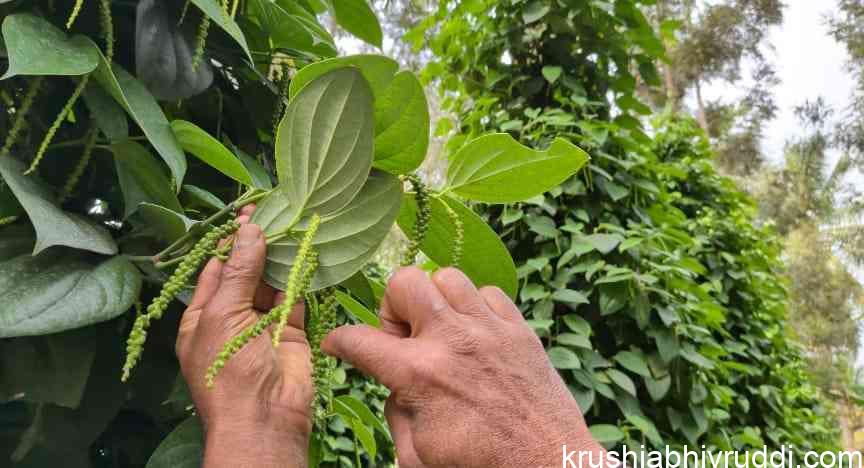
One of the interesting observations on his farm is the spike size and berry density of Panniyur-9.
Compared with some commonly cultivated Panniyur varieties, which may normally produce around two to three spikes at lateral branch (Plagiotropic), Panniyur-9 can produce around four spikes, with good spike length.
Another practical parameter Mr. Chacko observes is the weight of pepper in a one-litre vessel. (Liter weight)
According to his farm experience, good-quality, well-matured pepper should generally weigh around 500–550 grams or more per litre. When the weight falls below 500 grams, it indicates lighter berries and comparatively lower quality.
The Panniyur-9 pepper harvested from his farm has regularly shown good weight, often above 550 grams litre weight
. This is one of the reasons why he has become confident about this variety.
Two Methods of Pepper Cultivation:
Mr. Chacko is following two different cultivation systems in his nearby plots.
In one plot, pepper is grown using both rubber and Silver Oak trees as support. In another plot, he is growing pepper mainly with Silver Oak as the support tree.
The rough, gripping surface of the Silver Oak stem provides excellent support for pepper vines, allowing them to climb easily without slipping. Its natural canopy structure also provides a favourable growing environment for the pepper vines.
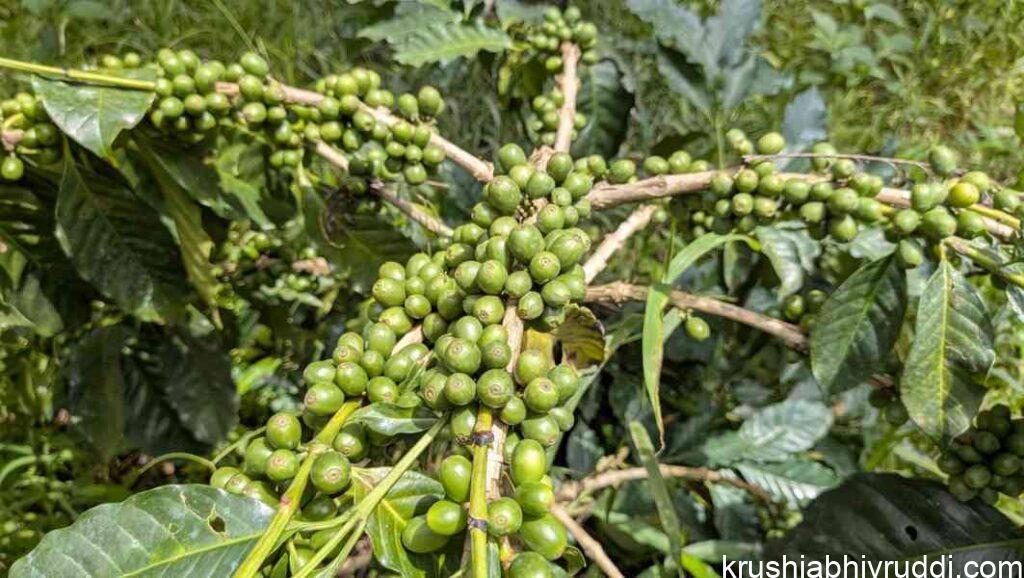
Along with pepper, Mr. Joseph Chacko has planted the new Chandragiri variety of coffee throughout the plantation, providing an additional source of income while its shade helps suppress weed growth around the base.
The Silver Oak-based system gives the farm a distinctive appearance. The well-managed pepper vines climbing the support trees create a plantation that resembles a model pepper garden.
The Importance of the Right Planting Material:

Another important feature of his farm is his use of orthotropic or top shoots for planting.
Black pepper has different types of shoots. Broadly, they include:
- Surface runners, which grow along the ground and are commonly used for propagation.
- Climbing or orthotropic shoots, which grow vertically on the support tree.
- Aerial shoots, which develop from the climbing shoots and have the ability to produce flowers.
Mr. Chacko has been using top shoots, or orthotropic shoots, for planting.
One major advantage of this planting material is that the shoot already has the characteristics of a mature climbing shoot. It can therefore establish quickly and, under suitable conditions, begin producing pepper relatively early.
Since the material is selected from healthy portions of the vine, it can also help reduce the risk associated with disease-infected planting material.
Surface runners, on the other hand, remain in contact with the soil and may have greater exposure to soil-borne pathogens if the mother plant or nursery conditions are not healthy.
The use of orthotropic shoots has therefore become increasingly popular among pepper growers in recent years.
“The Roots Must Breathe”:
One of the strongest messages from Mr. Chacko’s experience is that black pepper needs good soil aeration and drainage.
Pepper has a relatively delicate root (Fine, hair-like roots)system and is highly vulnerable to diseases such as Phytophthora foot rot/wilt, particularly during the rainy season.
When water remains around the root zone and soil aeration becomes poor, conditions become favourable for disease development.
Therefore, according to his experience, successful pepper cultivation begins not with fertilizer or spraying, but with proper land preparation and drainage.
The base of each pepper vine should not become a place where water stands. The land should have sufficient slope and a good drainage system so that even heavy rainfall can move away quickly.
Drainage is the First Protection:
A healthy pepper garden should allow rainwater to move away from the root zone without delay.
For this reason, Mr. Chacko gives importance to:
- Proper land preparation
- Good drainage channels
- Avoiding stagnant water around the vine
- Maintaining soil aeration
- Keeping the base of the vine healthy
These practices are especially important in the Malenadu region, where heavy rainfall can create favourable conditions for fungal diseases.
Preventive Protection Is Better Than Emergency Treatment
Mr. Chacko also follows preventive measures to protect his pepper vines.
His practices include 1% Bordeaux mixture spraying, appropriate copper-based fungicide drenching where required, micronutrient application and split doses of fertilizers.
The basic principle is simple: instead of waiting until the disease becomes severe, the plantation should be maintained in a healthy condition throughout the season.
Balanced nutrition is also important. Rather than applying the entire fertilizer requirement at once, split application helps supply nutrients according to the crop’s requirement and reduces unnecessary nutrient loss.
A Remarkable Yield:
The results from his cultivation system are encouraging.
By the third year, Mr. Chacko reports obtaining approximately 4–5 kg of dry black pepper per vine under his management conditions.
Of course, yield can vary according to variety, climate, support tree, soil, rainfall, plant health and management practices. Therefore, his results should be viewed as a field experience rather than a guaranteed yield for every farmer.
Nevertheless, his plantation clearly demonstrates what can be achieved when variety selection, healthy planting material, drainage, nutrition and preventive disease management are combined.
Malenadu: A Natural Home for Pepper:
The Malenadu region has a natural advantage for black pepper cultivation. Its climate, rainfall pattern, humidity and traditional farming systems have supported pepper cultivation for generations.
But favourable climate alone is not enough.
Today, changing rainfall patterns, excessive moisture, soil-related problems and diseases are becoming major challenges. Farmers therefore need to pay greater attention to soil health, drainage, suitable varieties and quality planting material.
Mr. Chacko’s farm is a good example of how traditional experience can be combined with observation and experimentation.
The Lesson from Joseph Chacko’s Farm:
The most important lesson from this field visit is not simply Panniyur-9, Silver Oak or the use of top shoots.
The bigger lesson is continuous learning.
Mr. Chacko did not remain with the first variety he planted. He observed its performance for several years, identified its limitations, experimented with other varieties and selected the one that performed better under his farm conditions.
His journey—from rubber cultivation to pepper cultivation, from Panniyur-5 to newer varieties, and from conventional planting material to orthotropic shoots—shows the importance of farmer observation and field-level experience.
His farm at Ripponpete stands as an encouraging example of how a farmer can turn a difficult situation into a new opportunity.
Good variety + healthy planting material + proper drainage + balanced nutrition + preventive disease management + continuous observation = a healthier and more productive pepper garden.
For farmers in the Malenadu region, this model offers an important message: the future of pepper cultivation may depend not only on what we plant, but also on how carefully we understand and manage the soil, water, variety and planting material.

