


Monocot plantation crops like coconut and arecanut have a unique growth habit that clearly distinguishes young leaves from old leaves. Unlike many other crops, these palms grow continuously from a single growing point at the crown, producing leaves in a fixed sequence. Each leaf, from emergence to senescence, performs a specific physiological role that directly affects plant health, yield, and longevity. Unfortunately, improper leaf cutting and unscientific spraying practices are common in many plantations, often leading to reduced productivity. Understanding the role of young and old leaves in photosynthesis, nutrient movement, and respiration is essential for making correct management decisions.
Leaf Arrangement and Growth Pattern in Monocot Palms:
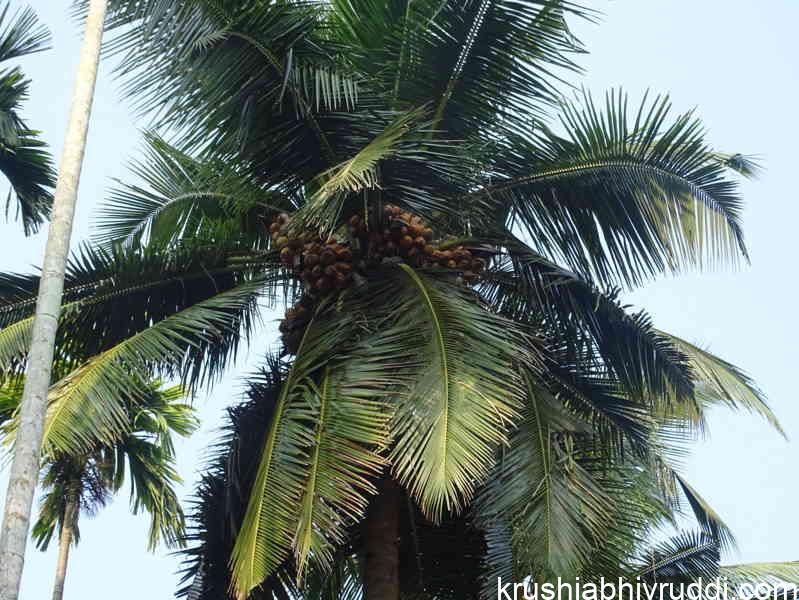
In coconut and arecanut palms, leaves are produced from the central spindle. The youngest leaves are located at the top, still tender and light green, while mature leaves occupy the middle portion of the crown. The oldest leaves are found at the lower part and gradually turn yellow before drying and falling naturally. This orderly arrangement is not random—each leaf age group contributes differently to the palm’s physiology.
Role of Young Leaves:
Young leaves are the future photosynthetic machinery of the palm. Though their photosynthetic rate is initially lower than mature leaves, they play a critical role in sustaining long-term productivity. These leaves have high metabolic activity and are actively involved in respiration and cell division. Nutrients absorbed by the roots are first directed towards young leaves to support their growth and expansion.
Young leaves are also sensitive to stress. Any damage caused by pests, diseases, chemical burn, or physical injury can permanently affect leaf size and efficiency. Since these leaves will later become the main photosynthesizing leaves, damage at this stage reduces the palm’s future energy production capacity.
Role of Old and Mature Leaves:
Mature leaves, located in the middle portion of the crown, are the primary photosynthesis centers. They manufacture carbohydrates that supply energy for flowering, nut development, root growth, and overall plant maintenance. These leaves act as both sources and temporary storage sites for nutrients and photosynthates.
Older leaves also play a role in nutrient recycling. As they age, mobile nutrients like nitrogen, phosphorus, potassium, and magnesium are translocated from older leaves to younger tissues. This is why deficiency symptoms often appear first on older leaves.
Even senescing leaves contribute indirectly by maintaining canopy balance and protecting the trunk from excessive sun exposure.
Respiration and Nutrient Movement:
Both young and old leaves actively respire, but young leaves have a higher respiration rate due to rapid growth and cell activity. Old leaves have lower respiration but remain essential for sustained energy production. Nutrient movement in palms follows a priority system—young leaves and developing reproductive structures receive nutrients first, supported by mature leaves.
Impact of Cutting Older Leaves:
Cutting older leaves unnecessarily can have negative consequences. Although dry, completely senesced leaves can be removed safely, green or partially yellow leaves should not be cut. Removing functional older leaves reduces the total photosynthetic area, leading to lower carbohydrate production. This directly affects nut filling, bunch size, and overall yield. Excessive leaf removal also disturbs nutrient recycling and weakens the palm, making it more susceptible to stress and pests.
Impact of Cutting Young Leaves:
Cutting young leaves is far more damaging. Since young leaves contain the growing tissues and future photosynthetic potential, their removal causes permanent yield loss. It can reduce crown size, delay flowering, and stunt palm growth. In severe cases, injury to the spindle region can even kill the palm. Young leaves should never be cut except under extreme disease management situations advised by experts.
Spraying Practices: Which Leaves to Target:
Spraying decisions should be based on the type of chemical used.
For systemic pesticides and fungicides, spraying should focus on young to mature leaves, as these absorb chemicals more efficiently and translocate them throughout the plant. Proper coverage of the crown and emerging leaves is important.
For contact chemicals, thorough coverage of mature and older leaves is necessary, since these chemicals act only where they touch. However, spraying very old, dried leaves is wasteful and ineffective.
Spraying should avoid excessive wetting of the spindle to prevent rot, and it should always be done during cooler hours for better absorption.
In monocot palms like coconut and arecanut, young and old leaves function as a coordinated system rather than independent units. Young leaves determine future productivity, mature leaves sustain current yield, and older leaves support nutrient recycling. Unscientific leaf cutting and improper spraying disturb this balance, leading to reduced yield and long-term decline. By respecting the natural role of each leaf stage and adopting informed management practices, farmers can ensure healthy palms, stable yields, and sustainable plantation productivity.
